




Discover Bengal · Unfolded
❦Sam Manekshaw
Chief of Army Staff who directed India's 1971 war effort
Sam Manekshaw helped turn India's support for Bangladesh into a prepared, coordinated eastern campaign that ended with the joint command victory of 16 December 1971.
Biography
Context
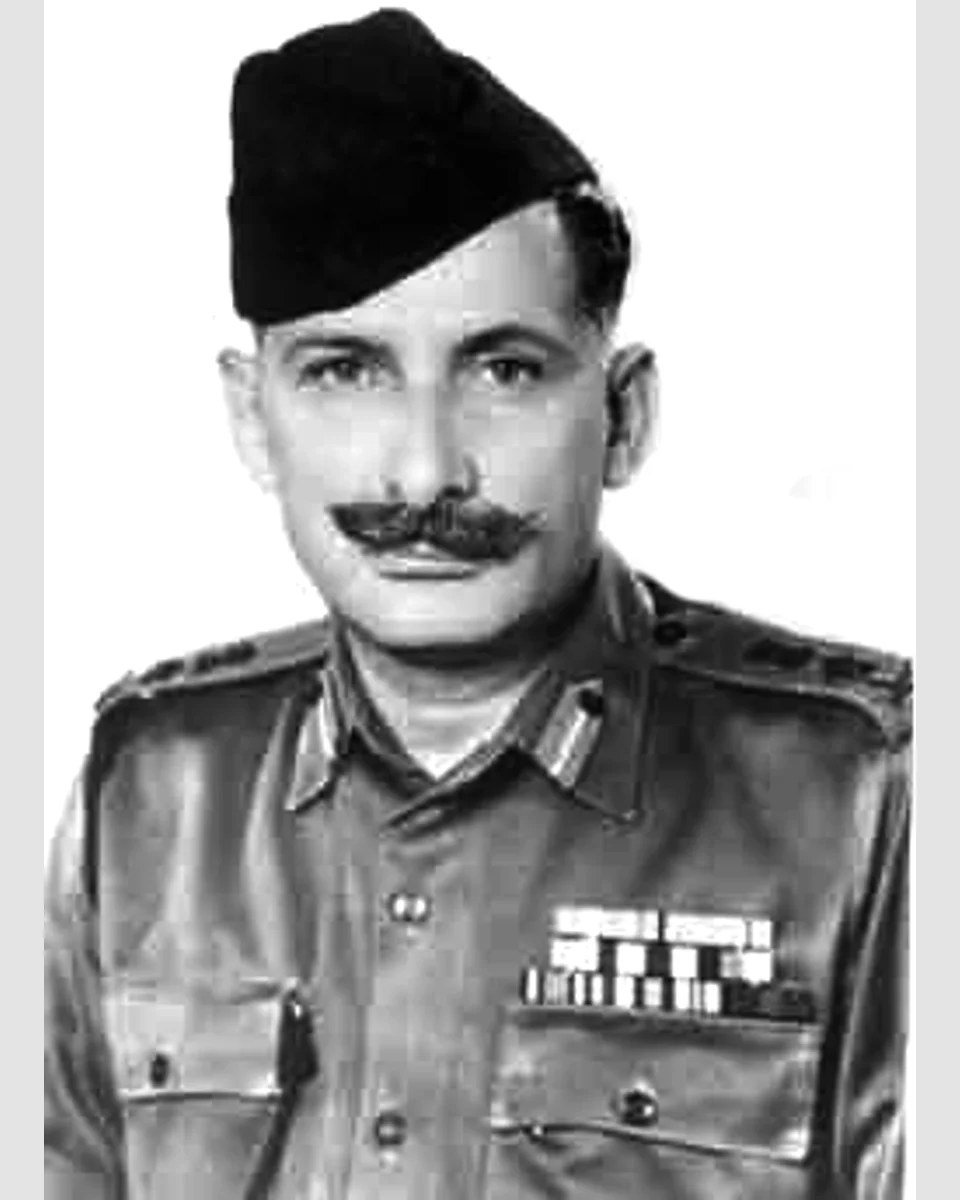
In the context of The war involved the Bangladesh Forces and Mukti Bahini, India's political and military leadership, and Pakistani forces defending East Pakistan. Manekshaw's role was strategic and institutional: he worked with the government to secure time for preparation, then directed the Army's campaign after Pakistan's attacks on India in December. Battlefield commands in the eastern theatre remained essential to the outcome., Sam Manekshaw is recognized as Chief of Army Staff who directed India's 1971 war effort. Sam Manekshaw helped turn India's support for Bangladesh into a prepared, coordinated eastern campaign that ended with the joint command victory of 16 December 1971.
Contribution
As India's Chief of Army Staff in 1971, Sam Manekshaw helped prepare and coordinate the Indian military response to the Bangladesh Liberation War. His command supported training and operational cooperation with Bengali forces and organized the eastern campaign around logistics, terrain, air mobility, and coordinated advances rather than an immediate full-scale intervention during the monsoon.
Impact
The coordinated campaign reached Dhaka and contributed to the surrender of Pakistani forces to the joint Bangladesh–India command on 16 December 1971. Manekshaw became a central figure in India's military narrative, but the victory depended on Bengali resistance, the Mujibnagar government's political leadership, Mukti Bahini operations, Indian services, and the wider regional crisis rather than on one commander alone.
Timeline Placement
Sam Manekshaw appears in 5 linked timeline events, spanning 1971 - 1971 (December).
First Appearance
1971
Latest Appearance
1971 (December)
Active Span
1971 - 1971 (December)
Linked Events
5
Legacy Summary
The coordinated campaign reached Dhaka and contributed to the surrender of Pakistani forces to the joint Bangladesh–India command on 16 December 1971. Manekshaw became a central figure in India's military narrative, but the victory depended on Bengali resistance, the Mujibnagar government's political leadership, Mukti Bahini operations, Indian services, and the wider regional crisis rather than on one commander alone. This influence is reflected across 5 connected events.
References
Key sources for understanding this figure
War of Liberation, The
A Bangladesh-centered overview that explains how the denied 1970 mandate fed into the 1971 war.
Cited in: 4 events
1971
A mega-documentary on the Bangladesh Liberation War, valuable as a broad visual archive of the year 1971.
Cited in: 1 events
1971: A Global History of the Creation of Bangladesh
Global perspective on the war across India, Pakistan, the U.S., USSR, and China.
Cited in: 1 events
1971: Inside and Outside
A post-1971 reflection on the war and its internal experience and political observation.
Cited in: 1 events
A History of Bangladesh
A synthetic history of Bangladesh from the long view through colonial encounters, East Pakistan, war, and independence.
Cited in: 1 events
A Tale of Millions: Bangladesh Liberation War 1971
A memoir-style account of the Liberation War from the perspective of a freedom fighter and military officer.
Cited in: 1 events
Related
Related Figures
A. A. K. Niazi
Commander of Pakistan's Eastern Command during the Bangladesh Liberation War
Abdul Kader Siddique
Guerrilla Commander ('Tiger Siddique')
C. R. Dutta
Sector 4 Commander
Mir Shawkat Ali
Sector 5 Commander
Wing Commander M. K. Bashar
Sector 6 Commander
A S M Abdur Rab
Student leader and 1971 flag-raising figure
Related Events
Related Places
Appears In Events
Timeline View