




Discover Bengal · Unfolded
❦C. R. Das
Bengal nationalist leader, barrister, and Swaraj Party founder
Chittaranjan Das became a leading nationalist lawyer after defending Aurobindo Ghosh in the 1908 Alipore Bomb Case. He later abandoned his legal practice during the Non-cooperation Movement, opposed the Congress boycott of legislatures, and founded the Swaraj Party with Motilal Nehru and other colleagues in 1923.
Biography
Context
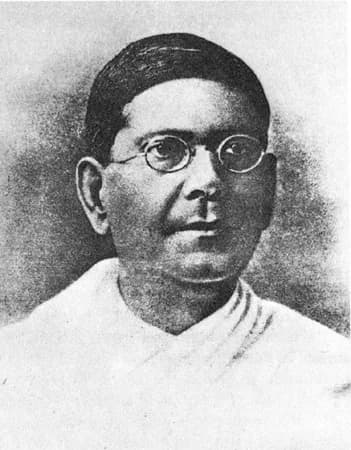
In the context of Early twentieth-century Bengal, where anti-colonial mass politics, constitutional obstruction, municipal government, and debates over Hindu-Muslim representation increasingly overlapped. Das argued that elected councils could be used for continuous opposition to colonial rule., C. R. Das is recognized as Bengal nationalist leader, barrister, and Swaraj Party founder. Chittaranjan Das became a leading nationalist lawyer after defending Aurobindo Ghosh in the 1908 Alipore Bomb Case. He later abandoned his legal practice during the Non-cooperation Movement, opposed the Congress boycott of legislatures, and founded the Swaraj Party with Motilal Nehru and other colleagues in 1923.
Contribution
Chittaranjan Das became a leading nationalist lawyer after defending Aurobindo Ghosh in the 1908 Alipore Bomb Case. He later abandoned his legal practice during the Non-cooperation Movement, opposed the Congress boycott of legislatures, and founded the Swaraj Party with Motilal Nehru and other colleagues in 1923.
Impact
As a Swarajist leader, Das helped win a major 1923 Bengal Legislative Council victory and became Calcutta's first elected mayor in 1924. His Bengal Pact sought Hindu-Muslim political accommodation, while his leadership influenced figures including Subhas Chandra Bose and left a lasting mark on Bengal's nationalist politics.
Timeline Placement
C. R. Das appears in 3 linked timeline events, spanning 1876 - 1923.
First Appearance
1876
Latest Appearance
1923
Active Span
1876 - 1923
Linked Events
3
Legacy Summary
As a Swarajist leader, Das helped win a major 1923 Bengal Legislative Council victory and became Calcutta's first elected mayor in 1924. His Bengal Pact sought Hindu-Muslim political accommodation, while his leadership influenced figures including Subhas Chandra Bose and left a lasting mark on Bengal's nationalist politics. This influence is reflected across 3 connected events.
References
Key sources for understanding this figure
A History of Bangladesh
A synthetic history of Bangladesh from the long view through colonial encounters, East Pakistan, war, and independence.
Cited in: 3 events
History
General Bangladesh history reference useful for political chronology around the Ershad takeover and the 1980s authoritarian period.
Cited in: 2 events
A Case Study of Swadeshi Bengal
A classic study for the local dynamics of the Swadeshi upsurge and the way nationalist thought crystallized in Bengal.
Cited in: 1 events
Amar Dekha Rajnitir Panchash Bochor
Abul Mansur Ahmad's political memoir spans anti-British politics, the Pakistan period, and the emergence of Bangladesh.
Cited in: 1 events
And Swadeshi Movement in Bengal (1905)
Useful for trade, industry, agriculture, boycott politics, and the economic reach of the Swadeshi upsurge.
Cited in: 1 events
Begum Rokeya
Banglapedia profile for Begum Rokeya; her reformist writings and feminist imagination are central to Bengali Muslim modernity.
Cited in: 1 events
Related
Related Figures
Surendranath Banerjea
Nationalist Leader and Organizer
A. K. Fazlul Huq
Political Leader
Abul Kalam Azad
Muslim scholar-politician of anti-colonial India
Bankim Chandra Chattopadhyay
Novelist and formative voice of modern Bengali prose
Begum Rokeya
Pioneer of women’s education and reform in Bengal
Dinesh Chandra Sen
Scholar of Bengali literature
Related Events
Related Places
Appears In Events
Timeline View