



Discover Bengal · Unfolded
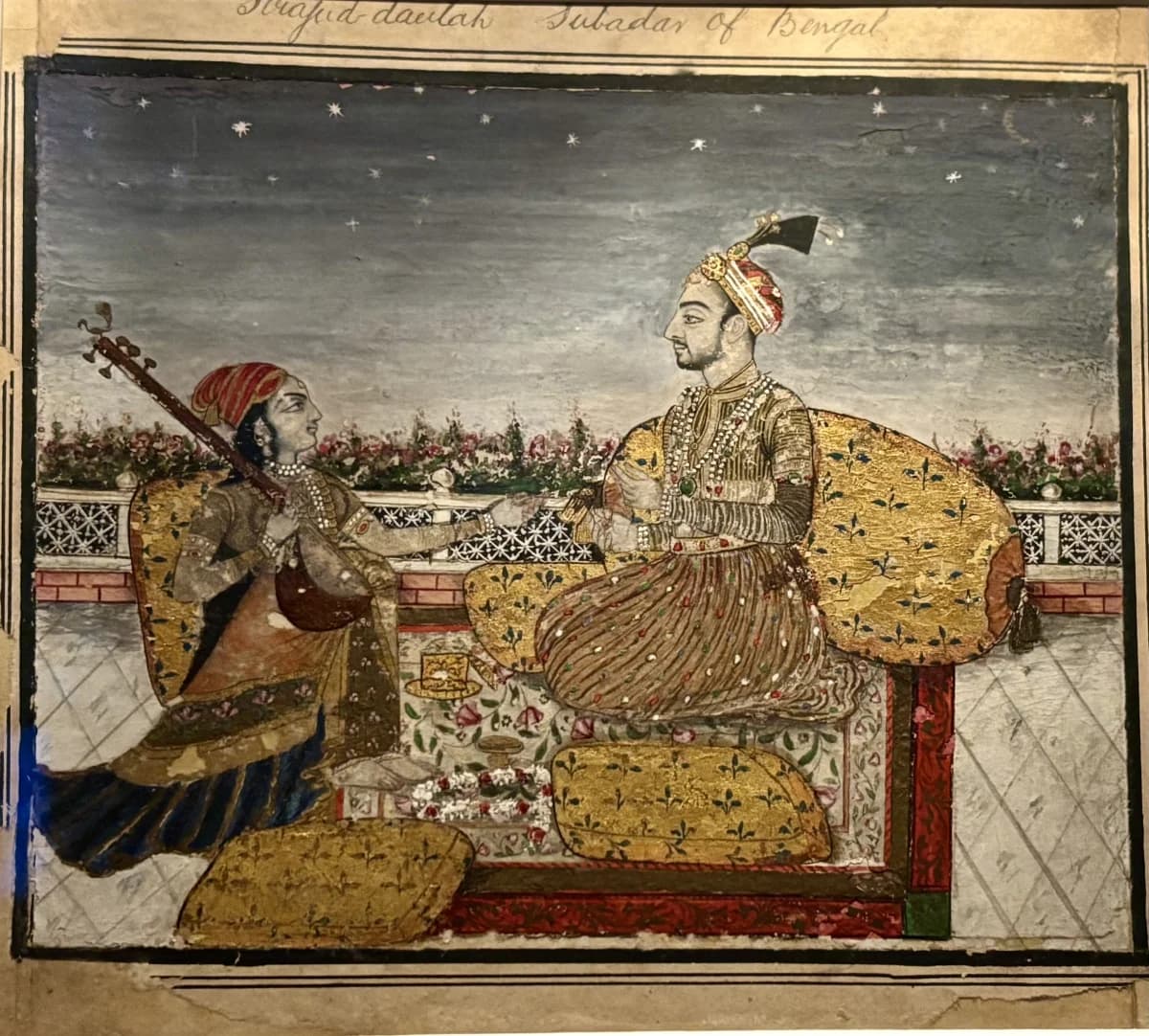
❦Siraj ud-Daulah
Nawab of Bengal
As Nawab of Bengal, he led resistance against East India Company encroachment and commanded Bengal's side in the Battle of Plassey in 1757.
Biography
Context

In the context of Bengal Subah, 1756-1757; confrontation with the East India Company over sovereignty and control., Siraj ud-Daulah is recognized as Nawab of Bengal. As Nawab of Bengal, he led resistance against East India Company encroachment and commanded Bengal's side in the Battle of Plassey in 1757.
Contribution
As Nawab of Bengal, he led resistance against East India Company encroachment and commanded Bengal's side in the Battle of Plassey in 1757.
Impact
His defeat at Plassey became a foundational turning point in the political subordination of Bengal.
Timeline Placement
Siraj ud-Daulah appears in 5 linked timeline events, spanning 1756 - 1770.
First Appearance
1756
Latest Appearance
1770
Active Span
1756 - 1770
Linked Events
5
Legacy Summary
His defeat at Plassey became a foundational turning point in the political subordination of Bengal. This influence is reflected across 5 connected events.
References
Key sources for understanding this figure
A Comprehensive History of Modern Bengal, 1700-1950
A three-volume survey covering the Nawabi era, colonial remaking, and the freedom struggle through 1950.
Cited in: 4 events
Seir Mutaqherin / Siyar-ul-Mutakhkherin
A late eighteenth-century history of Mughal India that is essential for understanding Bengal Nawabs and Plassey.
Cited in: 3 events
The English Factories in India
Calendar records of East India Company activity are valuable for trade, factories, and the commercial expansion that preceded colonial rule.
Cited in: 3 events
Battle of Plassey
Concise reference on the actors, military context, and imperial consequences of the 23 June 1757 battle.
Cited in: 2 events
Diwani
Bengal-focused reference on the diwani system, the 1765 agreements, and how revenue authority passed to the East India Company.
Cited in: 2 events
East India Company
Overview of the Company's shift from trade to colonial rule, including the grant of diwani rights and its economic consequences in Bengal.
Cited in: 2 events
Related
Related Figures
Related Events
Related Places
Appears In Events
Timeline View