




Discover Bengal · Unfolded
❦Munier Chowdhury
Teacher, Playwright, and Language Movement Intellectual
He protested the 1952 killings, was imprisoned, and wrote the play “Kabar,” one of the movement's most powerful literary responses.
Biography
Context
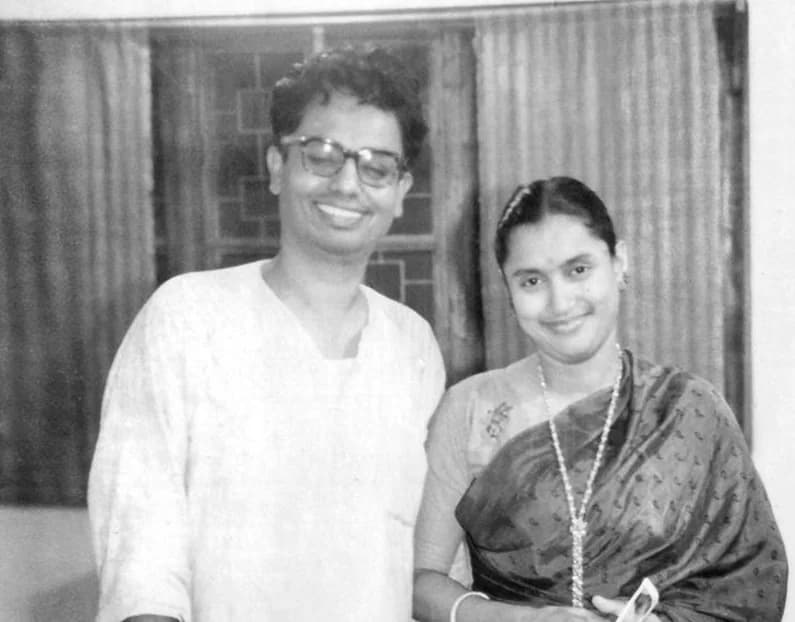
In the context of Dhaka University, prison, and progressive cultural politics in the 1950s., Munier Chowdhury is recognized as Teacher, Playwright, and Language Movement Intellectual. He protested the 1952 killings, was imprisoned, and wrote the play “Kabar,” one of the movement's most powerful literary responses.
Contribution
He protested the 1952 killings, was imprisoned, and wrote the play “Kabar,” one of the movement's most powerful literary responses.
Impact
He gave the language movement a lasting dramatic and intellectual form that outlived the immediate confrontation.
Timeline Placement
Munier Chowdhury appears in 2 linked timeline events, spanning 1952 - 1971.
First Appearance
1952
Latest Appearance
1971
Active Span
1952 - 1971
Linked Events
2
Legacy Summary
He gave the language movement a lasting dramatic and intellectual form that outlived the immediate confrontation. This influence is reflected across 2 connected events.
References
Key sources for understanding this figure
A History of Bangladesh
A synthetic history of Bangladesh from the long view through colonial encounters, East Pakistan, war, and independence.
Cited in: 2 events
Amar Dekha Rajnitir Panchash Bochor
Abul Mansur Ahmad's political memoir spans anti-British politics, the Pakistan period, and the emergence of Bangladesh.
Cited in: 2 events
Internal colonisation, national liberation and cultural resistance: A postcolonial reading of pre-Bangladesh Bangla poetry of resistance
Best for the 1969-1971 cultural resistance arc, showing how poetry connected language politics to national liberation.
Cited in: 2 events
Language as Political Articulation: East Bengal in 1952
One of the strongest papers for the Language Movement, Bengali nationalism, and the political meaning of 1952.
Cited in: 2 events
The Emergence of Bangladesh
An interdisciplinary volume on the making of Bangladesh, from language politics to the 1971 war and beyond.
Cited in: 2 events
1971
A mega-documentary on the Bangladesh Liberation War, valuable as a broad visual archive of the year 1971.
Cited in: 1 events
Related
Related Figures
Sheikh Mujibur Rahman
Student Organizer and National Leader
A S M Abdur Rab
Student leader and 1971 flag-raising figure
A. A. K. Niazi
Commander of Pakistan Eastern Command
A. H. M. Qamaruzzaman
Home affairs leader in the Provisional Government
A. T. M. Haider
Sector Commander (Sector 2, later phase)
Abdul Gaffar Choudhury
Lyricist and Witness
Related Events
Related Places
Appears In Events
Timeline View