



Discover Bengal · Unfolded
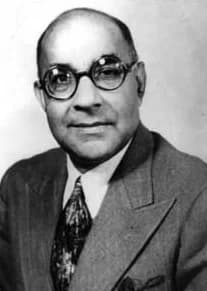
❦Liaquat Ali Khan
Muslim League Statesman
He was a key Muslim League negotiator in the final constitutional settlement and became Pakistan's first prime minister.
Biography
Context

In the context of Transfer of power and early state-building in Pakistan., Liaquat Ali Khan is recognized as Muslim League Statesman. He was a key Muslim League negotiator in the final constitutional settlement and became Pakistan's first prime minister.
Contribution
He was a key Muslim League negotiator in the final constitutional settlement and became Pakistan's first prime minister.
Impact
His political role connected the all-India demand for Pakistan to the first phase of governance that included East Bengal.
Timeline Placement
Liaquat Ali Khan appears in 3 linked timeline events, spanning 1906 - 1952.
First Appearance
1906
Latest Appearance
1952
Active Span
1906 - 1952
Linked Events
3
Legacy Summary
His political role connected the all-India demand for Pakistan to the first phase of governance that included East Bengal. This influence is reflected across 3 connected events.
References
Key sources for understanding this figure
A History of Bangladesh
A synthetic history of Bangladesh from the long view through colonial encounters, East Pakistan, war, and independence.
Cited in: 2 events
Amar Dekha Rajnitir Panchash Bochor
Abul Mansur Ahmad's political memoir spans anti-British politics, the Pakistan period, and the emergence of Bangladesh.
Cited in: 2 events
Language Movement
A broad reference entry covering the origins, phases, clashes, and long-term significance of the language movement.
Cited in: 2 events
Partition Politics
A Bengal-centered reference entry on the politics, contradictions, and communal dynamics that produced partition.
Cited in: 2 events
The Great Partition: The Making of India and Pakistan
A clear historical overview of how British withdrawal, elite negotiation, and mass violence produced partition in 1947.
Cited in: 2 events
The Unfinished Memoirs
Sheikh Mujibur Rahman's autobiography is central to understanding 1930s-1950s Bengal politics, the Muslim League, and the Language Movement.
Cited in: 2 events
Related
Related Figures
Related Events
Related Places
Appears In Events
Timeline View