



Discover Bengal · Unfolded
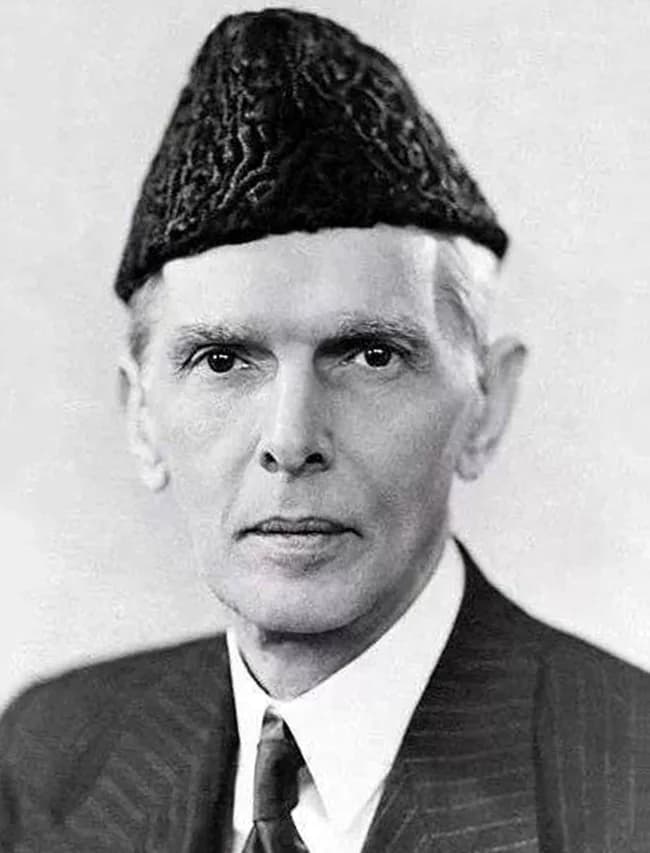
❦Muhammad Ali Jinnah
All-India Muslim League Leader
He led the demand for Pakistan and negotiated the political framework that brought East Bengal into the new state.
Biography
Context

In the context of All-India negotiations over constitutional transfer and partition., Muhammad Ali Jinnah is recognized as All-India Muslim League Leader. He led the demand for Pakistan and negotiated the political framework that brought East Bengal into the new state.
Contribution
He led the demand for Pakistan and negotiated the political framework that brought East Bengal into the new state.
Impact
No single figure was more central to the creation of Pakistan, of which East Bengal became a major eastern wing.
Timeline Placement
Muhammad Ali Jinnah appears in 9 linked timeline events, spanning 1906 - 1952.
First Appearance
1906
Latest Appearance
1952
Active Span
1906 - 1952
Linked Events
9
Legacy Summary
No single figure was more central to the creation of Pakistan, of which East Bengal became a major eastern wing. This influence is reflected across 9 connected events.
References
Key sources for understanding this figure
Partition Politics
A Bengal-centered reference entry on the politics, contradictions, and communal dynamics that produced partition.
Cited in: 6 events
The Great Partition: The Making of India and Pakistan
A clear historical overview of how British withdrawal, elite negotiation, and mass violence produced partition in 1947.
Cited in: 5 events
A History of Bangladesh
A synthetic history of Bangladesh from the long view through colonial encounters, East Pakistan, war, and independence.
Cited in: 4 events
The Unfinished Memoirs
Sheikh Mujibur Rahman's autobiography is central to understanding 1930s-1950s Bengal politics, the Muslim League, and the Language Movement.
Cited in: 3 events
Amar Dekha Rajnitir Panchash Bochor
Abul Mansur Ahmad's political memoir spans anti-British politics, the Pakistan period, and the emergence of Bangladesh.
Cited in: 2 events
Begum Rokeya
Banglapedia profile for Begum Rokeya; her reformist writings and feminist imagination are central to Bengali Muslim modernity.
Cited in: 2 events
Related
Related Figures
Related Events
Appears In Events
Timeline View