




Discover Bengal · Unfolded
❦Ishwar Chandra Vidyasagar
Educationist and social reformer of the Bengal Renaissance
A nineteenth-century Bengali educator and reformer whose work joined school expansion with the campaign for widow remarriage.
Biography
Context
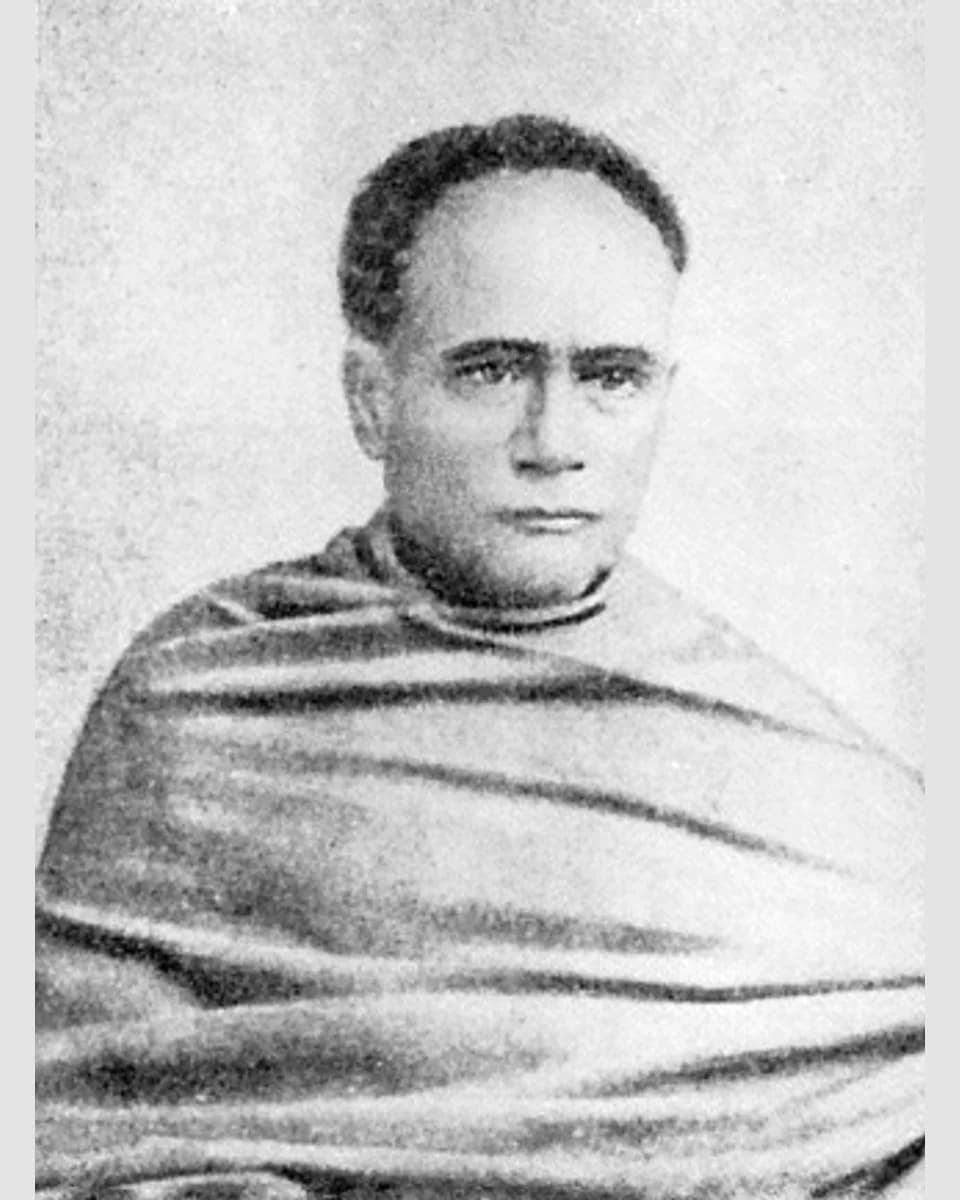
In the context of In nineteenth-century colonial Bengal, he connected debates over Sanskrit learning, school administration, Bengali textbooks, and social custom. His petitions and scriptural arguments helped make widow remarriage a central reform question in the 1850s., Ishwar Chandra Vidyasagar is recognized as Educationist and social reformer of the Bengal Renaissance. A nineteenth-century Bengali educator and reformer whose work joined school expansion with the campaign for widow remarriage.
Contribution
As a Sanskrit scholar, education administrator, and Bengali author, he widened access to vernacular learning, supported girls’ schools, and campaigned for Hindu widow remarriage.
Impact
His education work and public campaign contributed to the passage of the Hindu Widows’ Remarriage Act in 1856, while his textbooks and school initiatives shaped Bengali education and later discussions of social reform.
Timeline Placement
Ishwar Chandra Vidyasagar appears in 4 linked timeline events, spanning 1828 - 1874.
First Appearance
1828
Latest Appearance
1874
Active Span
1828 - 1874
Linked Events
4
Legacy Summary
His education work and public campaign contributed to the passage of the Hindu Widows’ Remarriage Act in 1856, while his textbooks and school initiatives shaped Bengali education and later discussions of social reform. This influence is reflected across 4 connected events.
References
Key sources for understanding this figure
History
General Bangladesh history reference useful for political chronology around the Ershad takeover and the 1980s authoritarian period.
Cited in: 3 events
A History of Bangladesh
A synthetic history of Bangladesh from the long view through colonial encounters, East Pakistan, war, and independence.
Cited in: 2 events
'Capture & Death of the Shahzadaghs', 1857
Museum catalog record describing the capture of Bahadur Shah Zafar and the subsequent shooting of three Mughal princes after Delhi's fall.
Cited in: 1 events
Assam
Reference entry covering Assam's 1874 administrative separation from Bengal and related Sylhet/Cachar implications.
Cited in: 1 events
Bahadur Shah II
Profile of the last Mughal emperor and his symbolic role in Delhi during the rebellion.
Cited in: 1 events
Indian Rebellion of 1857
Foundational overview of causes, spread, key theatres, and suppression of the 1857-59 uprising.
Cited in: 1 events
Related
Related Figures
Bankim Chandra Chattopadhyay
Novelist and formative voice of modern Bengali prose
Michael Madhusudan Dutt
Poet-dramatist and pioneer of modern Bengali literary form
Ahmad Khan Kharal
Regional anti-colonial rebel leader in Punjab
Ali Bahadur II
Nawab of Banda and rebel ally in Bundelkhand
Amar Singh
Jagdishpur rebel commander and successor to Kunwar Singh
Azimullah Khan
Political adviser to Nana Sahib
Related Events
Related Places
Appears In Events
Timeline View