




Discover Bengal · Unfolded
❦Hussain Muhammad Ershad
Army Chief and Military Ruler
He led the 1982 coup, imposed martial law, and built the military-backed political order that dominated Bangladesh through most of the 1980s.
Biography
Context
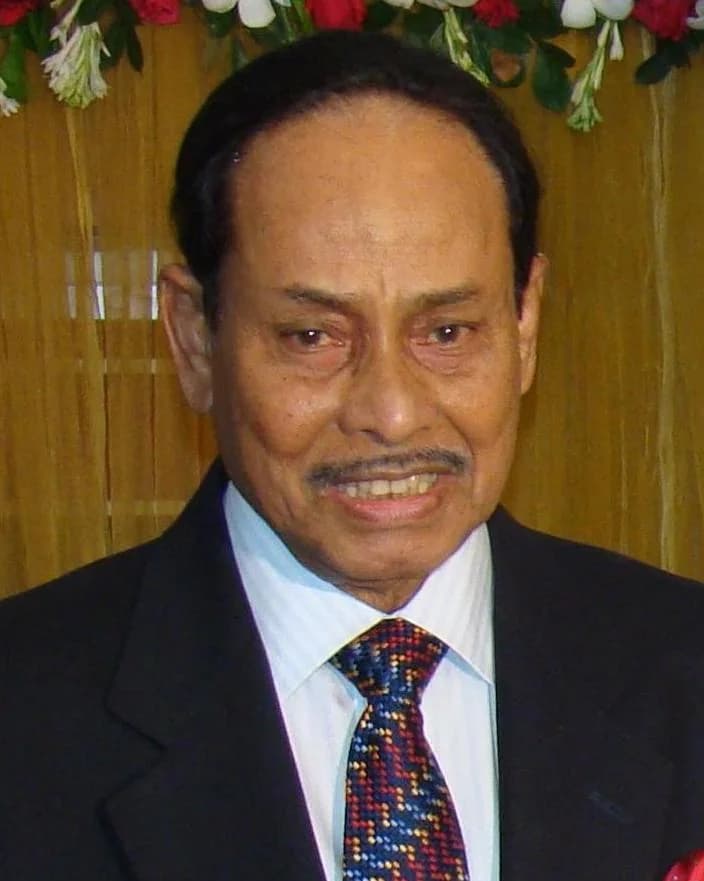
In the context of Bangladesh's authoritarian transition from 1982 to 1990., Hussain Muhammad Ershad is recognized as Army Chief and Military Ruler. He led the 1982 coup, imposed martial law, and built the military-backed political order that dominated Bangladesh through most of the 1980s.
Contribution
He led the 1982 coup, imposed martial law, and built the military-backed political order that dominated Bangladesh through most of the 1980s.
Impact
His rule redefined the relationship between army, presidency, party politics, and street opposition in post-liberation Bangladesh.