




Discover Bengal · Unfolded
❦Ghulam Azam
Islamist political leader
As Jamaat-e-Islami's East Pakistan leader, he opposed Bangladesh's independence movement and became associated in Bangladeshi historical memory with collaborationist politics during 1971.
Biography
Context
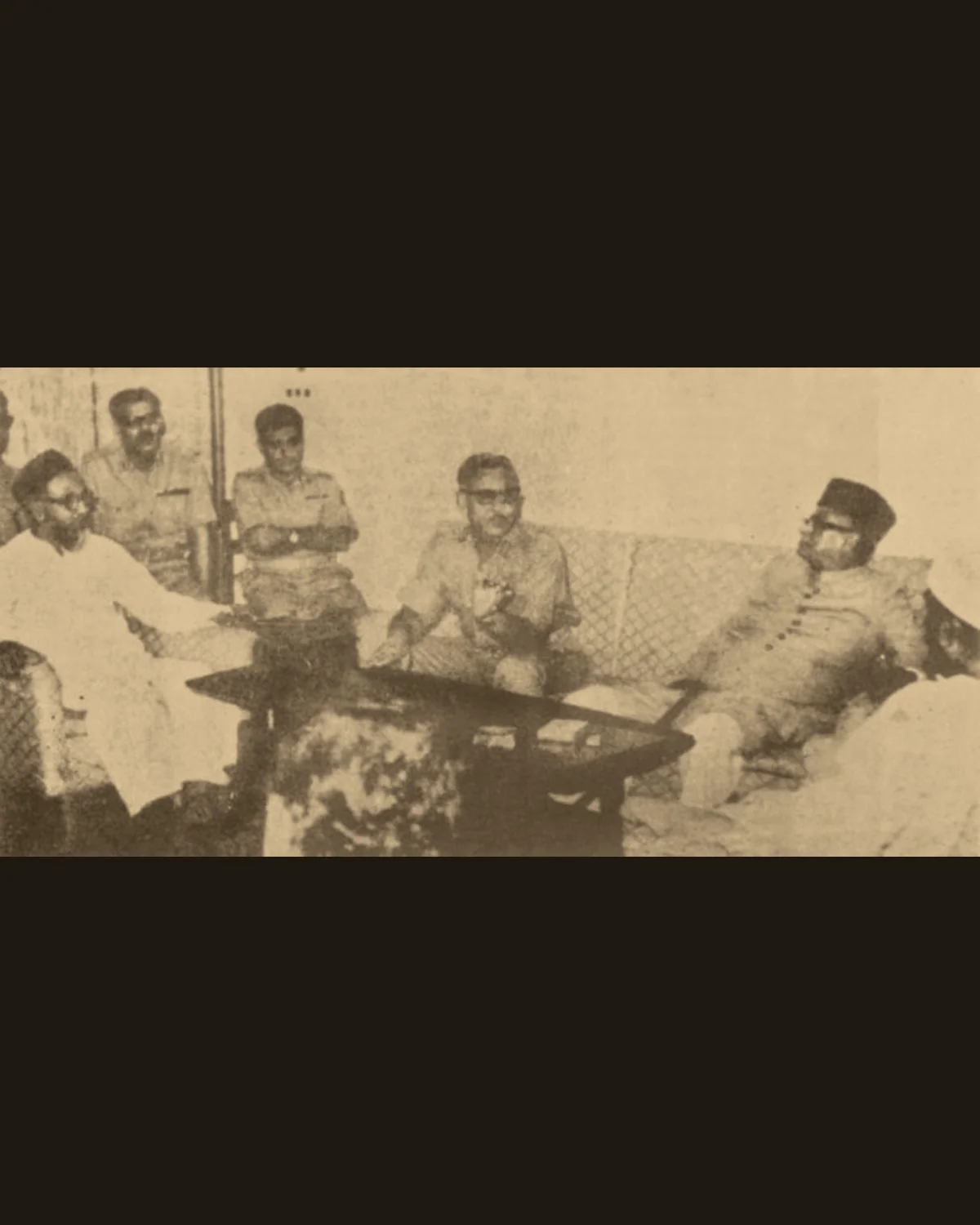
In the context of The 1971 Liberation War, anti-independence political mobilization, and later Bangladesh debates over war crimes and collaboration., Ghulam Azam is recognized as Islamist political leader. As Jamaat-e-Islami's East Pakistan leader, he opposed Bangladesh's independence movement and became associated in Bangladeshi historical memory with collaborationist politics during 1971.
Contribution
As Jamaat-e-Islami's East Pakistan leader, he opposed Bangladesh's independence movement and became associated in Bangladeshi historical memory with collaborationist politics during 1971.
Impact
His profile is sensitive and contested because it sits at the center of Bangladesh's public memory around collaboration, accountability, and the political legacy of 1971.
Timeline Placement
Ghulam Azam appears in 3 linked timeline events, spanning 1971 - 2013.
First Appearance
1971
Latest Appearance
2013
Active Span
1971 - 2013
Linked Events
3
Legacy Summary
His profile is sensitive and contested because it sits at the center of Bangladesh's public memory around collaboration, accountability, and the political legacy of 1971. This influence is reflected across 3 connected events.
References
Key sources for understanding this figure
A History of Bangladesh
A synthetic history of Bangladesh from the long view through colonial encounters, East Pakistan, war, and independence.
Cited in: 3 events
Bangladesh: Quest for Freedom and Justice
Kamal Hossain's memoir traces liberation, constitution-making, democracy, and the justice question.
Cited in: 3 events
Abdul Quader Mollah Appeal Judgment, 2013
Primary appellate judicial document on the appeal, death sentence, and reasoning in the ICT case.
Cited in: 2 events
Abdul Quader Mollah Verdict, 2013
Core judicial source for the 5 February 2013 verdict that triggered the Shahbag movement.
Cited in: 2 events
Advertising Nationalism: Commemorating the Liberation War in Bangladesh
Strong for war commemoration, corporate nationalism, and public memory after liberation.
Cited in: 2 events
Bangladesh's Pendulum-swing Liberation War Cinema
Useful for cinema, representation, and how the war is reinterpreted in later memory cultures.
Cited in: 2 events
Related
Related Figures
Abdul Quader Mollah
Verdict trigger figure
Abul Kalam Azad (Bachchu Razakar)
Fugitive ICT convict known as Bachchu Razakar
Ashrafuzzaman Khan
Al-Badr figure convicted in absentia in the intellectual-killings case
ATM Azharul Islam
Jamaat leader in contested 1971 war-crimes proceedings
Chowdhury Mueen Uddin
Al-Badr figure convicted in absentia in the intellectual-killings case
Imran H. Sarkar
Spokesperson of Gonojagoron Moncho
Related Places
Appears In Events
Timeline View